
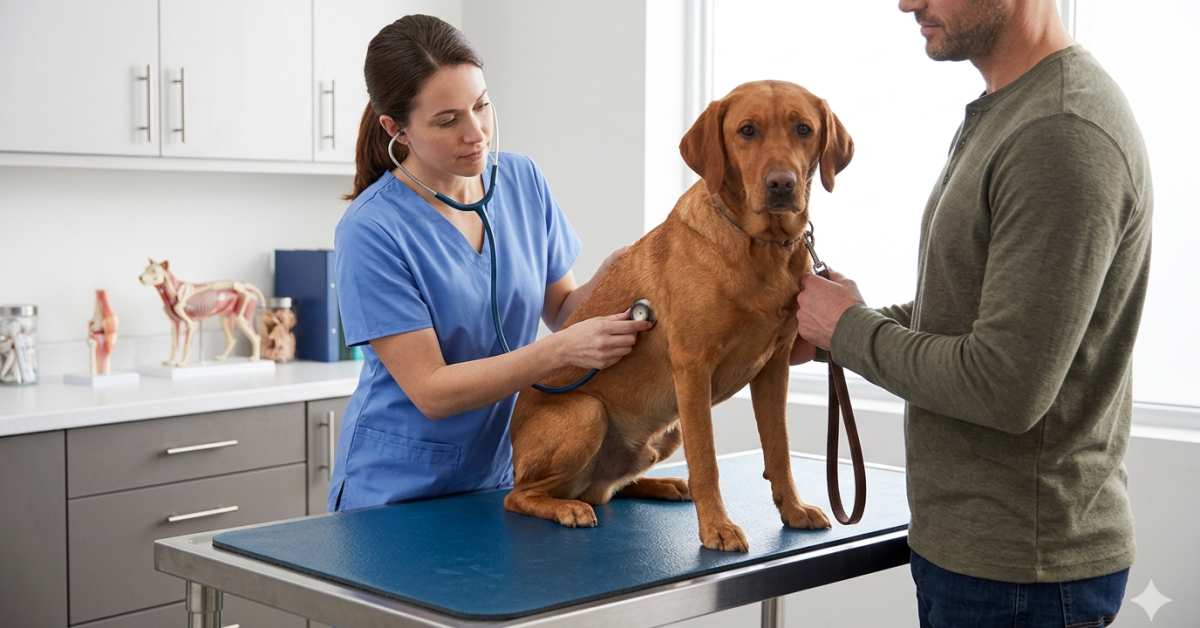
Cancer is one of the hardest words to hear in a vet's office. After years working as a veterinary technician, I watched a lot of families face that moment — and what I noticed was that the ones who caught it early almost always had better options. Early detection starts with knowing what to look for. Here's what I wish every dog owner knew.
Why Dogs Are Getting Cancer More Often
Dogs are living longer than they ever have, which means more time for cells to mutate and for cancers to develop. Studies estimate that cancer is the leading cause of death in dogs over age 10 — affecting roughly one in four dogs at some point in their lives. That number climbs even higher in certain breeds like Golden Retrievers, Bernese Mountain Dogs, Boxers, and Rottweilers, which have documented genetic predispositions.
The good news is that veterinary oncology has advanced enormously. Many cancers that were once considered death sentences are now treatable — sometimes with full remission — when caught early. That's why knowing the signs matters so much.
Warning Signs You Should Never Ignore
The American Veterinary Medical Association identifies these as the key warning signs of cancer in dogs:
- Abnormal swellings that persist or keep growing — any lump that wasn't there before or is getting larger needs to be evaluated. You cannot tell from the outside whether a lump is benign or malignant.
- Sores that won't heal — wounds or skin lesions that don't resolve within two weeks can indicate skin cancer or an immune system problem.
- Unexplained weight loss — significant weight loss without a change in diet or activity is always a red flag.
- Loss of appetite — especially when it persists beyond a day or two.
- Bleeding or unusual discharge from any body opening.
- Offensive odor — particularly from the mouth, ears, or skin that isn't explained by something obvious.
- Difficulty eating or swallowing — can indicate oral tumors or masses in the throat.
- Reluctance to exercise or loss of stamina — a dog who used to love walks and now lags behind or tires quickly.
- Persistent lameness or stiffness — especially in large breeds, this can signal bone cancer.
- Difficulty breathing, urinating, or defecating — any sudden change in these basic functions needs immediate attention.
Run your hands over your dog's entire body once a month — neck, chest, belly, legs, and under the tail. You're feeling for any new lumps, bumps, or changes in texture. Getting comfortable with what's normal makes it much easier to catch what's not.
The Most Common Cancers in Dogs
Mast Cell Tumors
The most common skin cancer in dogs. Mast cell tumors can look like almost anything — a raised bump, a flat lesion, something that looks like an insect bite. The only way to know for certain is a fine needle aspirate or biopsy. Many are completely removable with surgery when caught early.
Lymphoma
Cancer of the lymph nodes, spleen, liver, and other organs. Usually affects middle-aged to older dogs. One of the first signs is often swollen lymph nodes — you can feel these under the jaw, in front of the shoulders, and behind the knees. Lymphoma responds well to chemotherapy in many dogs, with remission periods of a year or more being common.
Osteosarcoma (Bone Cancer)
Aggressive and unfortunately common in large and giant breeds. It typically develops in the long bones of the legs. Persistent lameness in a large breed dog — especially if it's not improving with rest — should always be X-rayed.
Hemangiosarcoma
A cancer of blood vessel cells that most commonly affects the spleen, liver, and heart. It often shows no symptoms until it ruptures and causes internal bleeding. Senior dogs of large breeds, especially German Shepherds and Golden Retrievers, should have routine abdominal ultrasounds as they age.
Mammary Tumors
One of the most preventable cancers in dogs. Female dogs spayed before their first heat have roughly a 0.5% chance of developing mammary tumors. That risk jumps to 8% after one heat cycle and 26% after two. This is one of the strongest arguments for early spaying in female dogs.
What Happens After a Diagnosis
If your vet suspects cancer, next steps typically involve imaging, bloodwork, and either a fine needle aspirate or biopsy to confirm the type and stage. From there, treatment options depend entirely on the cancer type — surgery, chemotherapy, radiation, immunotherapy, or palliative care are all possibilities.
Ask for a referral to a veterinary oncologist if cancer is confirmed. They specialize in this and will give you the most accurate picture of what's possible for your specific dog.
You Are Not Alone in This
If your dog has been diagnosed with cancer, the weight of that is real. There are support resources available — veterinary social workers, online communities of owners navigating the same journey, and palliative care options focused on quality of life. Your presence and love make a real difference — in the clinic I watched it matter, every single time.
Stay on top of your dog's health with our free care checklist.
View the Dog Care Checklist →