
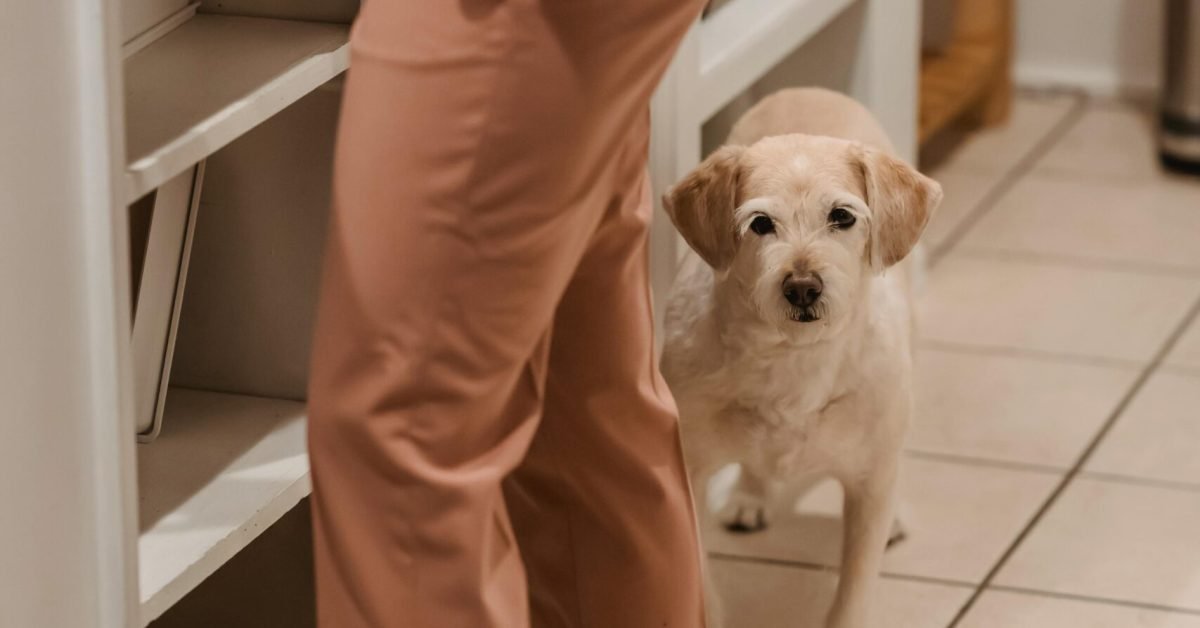
Why Does My Dog Follow Me Everywhere?
I cannot go anywhere in my house without an audience. Bentley, my 12-year-old Chihuahua, has followed me from room to room his entire life — including places I'd really rather have privacy. If you have a dog like this, you know exactly what I mean. Here's what's actually going on — and when it crosses a line worth paying attention to.
It Starts With How Dogs Are Wired
Dogs are social animals who evolved alongside humans over thousands of years. Unlike cats, who are more independent by nature, dogs are built for companionship and cooperation. Staying close to their person is deeply instinctive — it's not neediness, it's biology.
In the wild, canines live and move in groups. Being alone is genuinely stressful for most dogs at a biological level. Following you is their way of staying connected to their pack — which, in a domestic dog's world, is you.
The Most Common Reasons Dogs Follow You
You Are Their Person
The simplest explanation is usually the right one. Your dog follows you because they love you and your presence makes them feel safe. You're the source of food, walks, play, comfort, and security. Of course they want to be near you. This is normal, healthy bonding behavior and nothing to worry about.
They've Learned Good Things Happen Around You
If following you has been reinforced — even accidentally — your dog will keep doing it. Do you sometimes drop food while cooking? Give them attention when they appear at your side? Let them out when they follow you to the door? Dogs are incredibly good at learning patterns. If being near you reliably produces good outcomes, they'll be near you constantly.
Breed Tendencies
Some breeds were specifically developed to work closely alongside humans all day. Herding breeds like Border Collies, Australian Shepherds, and Corgis are wired to monitor and respond to their person's movements constantly — it's literally what they were bred to do. Velcro behavior in these breeds is especially intense and completely normal.
Other breeds known for tight human attachment include Vizslas, Labrador Retrievers, Golden Retrievers, and Maltese. If you have one of these, constant companionship comes with the territory.
They're Picking Up on Your Routine
Dogs read routine beautifully. If walking to the kitchen usually leads to their breakfast, and picking up your keys leads to a walk, your dog learns to monitor your movements for information about what comes next. Following you is partly about companionship and partly about staying informed.
Boredom or Under-Stimulation
A dog who isn't getting enough physical exercise or mental stimulation will default to following their owner because there's nothing else compelling to do. This version of following usually comes with other signs — restlessness, whining, nudging for attention, destructive behavior when left alone.
When Following Behavior Is Worth Paying Attention To
Most of the time, a dog who follows you is just a dog who loves you. But there are situations where it signals something that needs addressing:
Sudden Change in Behavior
If your dog suddenly starts following you much more closely than usual and this is new behavior — especially in a senior dog — it can be a sign they're not feeling well. Dogs often seek proximity to their owners when something is wrong physically. A vet visit is worth it if the change is sudden and unexplained.
Panic When You Leave
Following you everywhere indoors is normal. Panicking, destructing, or becoming inconsolable the moment you leave is separation anxiety — which is a different issue that needs its own attention. The key distinction is whether your dog is content and settled when you're home versus frantically monitoring you and distressed any time you move toward the door.
Inability to Relax Independently
A healthy dog who follows you should also be able to settle and rest on their own when given the opportunity. If your dog genuinely cannot relax unless they're touching you, and becomes visibly anxious even when you're in the same room but not engaged with them, that's worth discussing with your vet.
Should You Discourage It?
For most dogs in most households — no. A dog who follows you around is a happy, bonded dog. Enjoy it. It won't last forever, and if you've ever lost a dog you know exactly how much you miss the sound of little feet padding after you down the hallway.
Sugar is 15. She moves slowly now and doesn't always make it all the way across the house to find me. But when she does, it still means the world.
If the behavior is causing practical problems — tripping hazards, issues with other pets, or anxiety-driven following that's distressing your dog — teaching a solid "place" or "go to your bed" command gives your dog a job and a comfortable landing spot while still staying nearby. That's a happy compromise.
Send your dog to a specific mat or bed with the command "place." Reward them for staying there. Gradually increase the duration. This gives your velcro dog a designated spot near you without them being underfoot — and gives them the security of proximity without the tripping hazard.
Want fun ways to engage your dog's brain at home?
Try the Dog Trick Randomizer →