
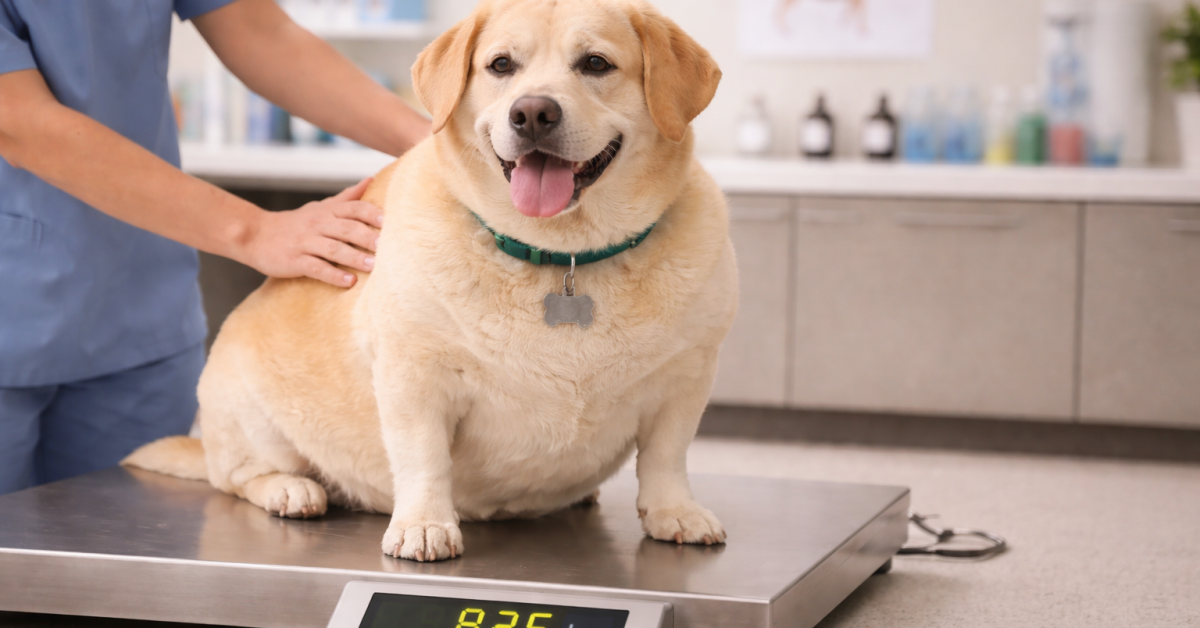
How to Help Your Dog Lose Weight Safely
In the clinic, we rarely had to tell owners their dog was underweight. Overweight was a different story. It was one of the most common findings at wellness visits and one of the most difficult conversations to have — not because owners didn't care, but because most of them genuinely had no idea. If your vet has mentioned your dog's weight, or if you're wondering yourself, here's what you need to know.
How Common Is Dog Obesity?
According to the Association for Pet Obesity Prevention, over 55% of dogs in the United States are classified as overweight or obese. That's more than half. It's one of the most significant preventable health problems in pet dogs today — and because weight gain happens gradually, it's one of the easiest things to miss when you see your dog every single day.
How to Tell If Your Dog Is Overweight
The scale alone doesn't tell the full story because healthy weight varies so much by breed and body type. The most reliable at-home check is the rib test — the same method vets use in the exam room.
Place both hands on your dog's ribcage and apply gentle pressure — about as much as you'd press on your closed eyelid. At a healthy weight you should be able to feel each rib clearly without pressing hard, with just a thin layer of flesh over them. If you have to press significantly to feel any ribs at all, your dog is carrying too much weight. If you can see the ribs clearly without touching, they may be underweight.
When you look at your dog from above, you should see a visible waist — a narrowing behind the ribs. From the side, the belly should tuck upward rather than hanging level or drooping. No visible waist and a straight or drooping belly profile are signs of excess weight.
Veterinarians use a 9-point Body Condition Score system to assess weight. Use our free BCS quiz to check where your dog falls right now.
Why Excess Weight Is Serious
This isn't about aesthetics. Extra weight on a dog carries real medical consequences:
- Joint disease and arthritis — every extra pound puts significant additional pressure on joints. Overweight dogs develop arthritis earlier and more severely than lean dogs.
- Shortened lifespan — studies consistently show that dogs maintained at an ideal body weight live an average of 1.8 years longer than overweight dogs. That's nearly two additional years.
- Diabetes — obesity is a primary risk factor for Type 2 diabetes in dogs.
- Heart and respiratory disease — excess weight strains the cardiovascular system and makes breathing harder, especially in flat-faced breeds.
- Increased surgical risk — anesthesia is significantly riskier in overweight patients, which becomes relevant any time your dog needs a procedure.
- Reduced immune function — chronic inflammation associated with obesity affects immune response.
The Safe Way to Help Your Dog Lose Weight
Step 1 — Talk to Your Vet First
Before changing your dog's diet significantly, rule out underlying medical causes. Hypothyroidism and Cushing's disease both cause weight gain that won't respond to diet changes until the condition is treated. A basic blood panel will catch these. This step is especially important in middle-aged and senior dogs.
Step 2 — Measure Everything
The most common cause of dog obesity is overfeeding — and most owners are overfeeding without realizing it. Feeding guidelines on dog food bags are intentionally generous. Start by measuring your dog's food with an actual measuring cup rather than estimating. You may be surprised how much more you've been giving than you thought.
Step 3 — Reduce Calories Gradually
A 10-20% reduction in daily calories is a safe starting point for most dogs. Do not cut food drastically all at once — this can cause nutritional deficiencies and a dog who is miserable and food-obsessed. Slow and steady works far better for dogs than crash dieting, just as it does for people.
Your vet can calculate a specific calorie target based on your dog's current weight, target weight, and activity level. This is the most reliable approach.
Step 4 — Watch the Treats
Treats can account for a shocking percentage of daily calories — especially if multiple family members are giving them throughout the day. During a weight loss period, switch to low-calorie treats like baby carrots, cucumber slices, blueberries, or green beans. Count them as part of the daily calorie budget. Let everyone in the household know the plan so you're not accidentally doubling up.
Step 5 — Increase Exercise Gradually
Don't go from minimal activity to long runs overnight — especially in a dog who is significantly overweight or has joint issues. Start by adding 10-15 minutes of gentle walking to your current routine and build from there. Swimming is an excellent low-impact option for dogs with arthritis since it provides cardio without joint stress.
Mental exercise matters too — puzzle feeders, training sessions, and enrichment activities burn calories and reduce boredom-driven food seeking behavior.
Step 6 — Weigh Monthly and Adjust
Most vet clinics will let you bring your dog in just to use the scale — no appointment needed. Aim for a weight loss rate of about 1-2% of body weight per month. Faster than that and you risk muscle loss along with fat. Slower and the plan may need adjusting. Consistent monitoring keeps you on track.
A Word on the Guilt
Owners often feel terrible when they find out their dog is overweight — like they've failed them in some way. I want to be clear: feeding your dog generously and giving lots of treats usually comes from love, not neglect. The problem is that dogs are very good at convincing us they're starving when they're not, and it's easy to give in.
The good news is that dogs respond well to weight loss programs when they're done correctly. Many dogs who were stiff and reluctant to move become visibly more comfortable and energetic after losing even a small amount of weight. It's one of the most rewarding things to watch.
Check your dog's Body Condition Score right now with our free quiz.
Take the BCS Quiz →