
Summer Safety Guide for Dog Owners — Keep Your Pup Safe in the Heat
Summer brings longer walks, outdoor adventures and quality time with your dog. It also brings heat-related emergencies that are entirely preventable with the right knowledge. As a former military veterinary technician I treated heat-related cases throughout my career — and every single one could have been avoided. Here is what you need to know.
Why Summer Is Genuinely Dangerous for Dogs
Dogs are far more vulnerable to heat than most owners realize. Unlike humans who sweat across their entire body surface, dogs regulate body temperature primarily through panting. This system is significantly less efficient — which means dogs can overheat quickly, even on days that feel only moderately warm to us.
A dog's normal body temperature is 101 to 102.5 degrees F. At 104 degrees they are in danger. At 106 degrees or above they face organ damage, brain damage and death. The transition from normal to dangerous can happen in minutes under the right — or wrong — conditions.
The Hot Pavement Test
This is one of the most important things every dog owner should know and do before every single summer walk.
Place the back of your hand flat on the pavement and hold it there for seven seconds. If you cannot hold it comfortably for the full seven seconds — it is too hot for your dog's paw pads.
Asphalt and concrete absorb and hold heat. On a day when the air temperature is 85 degrees F the pavement surface can reach 135 to 145 degrees F. Paw pad burns happen quickly and are extremely painful. Dogs will continue walking on burned paws because their drive to stay with you overrides the pain signal.
Safe walking times in summer:
- Early morning — before 9am when pavement has not yet heated up
- Evening — after 7pm when pavement has had time to cool
- Stick to grass and shaded paths whenever possible
- Dog booties offer genuine protection for dogs who tolerate them
Signs of Heatstroke — Act Immediately
Heatstroke is a life-threatening emergency. Knowing the signs and acting fast makes the difference between recovery and tragedy.
Early Warning Signs
Excessive panting and drooling. Seeking shade constantly. Reluctance to move. Bright red gums and tongue. Glassy or unfocused eyes.
Emergency Signs
Vomiting or diarrhea. Stumbling or weakness. Collapse. Seizures. Very pale, white or blue gums. Loss of consciousness.
What To Do If You Suspect Heatstroke
- Move your dog to a cool area immediately — air conditioning if possible
- Apply cool (not ice cold) water to paw pads, armpits, groin and neck
- Place a fan on your dog to increase evaporative cooling
- Offer small amounts of cool water to drink — do not force it
- Call your vet or emergency animal hospital immediately
- Transport to vet as soon as your dog is stable enough to move
Keeping Your Dog Cool All Summer
Hydration
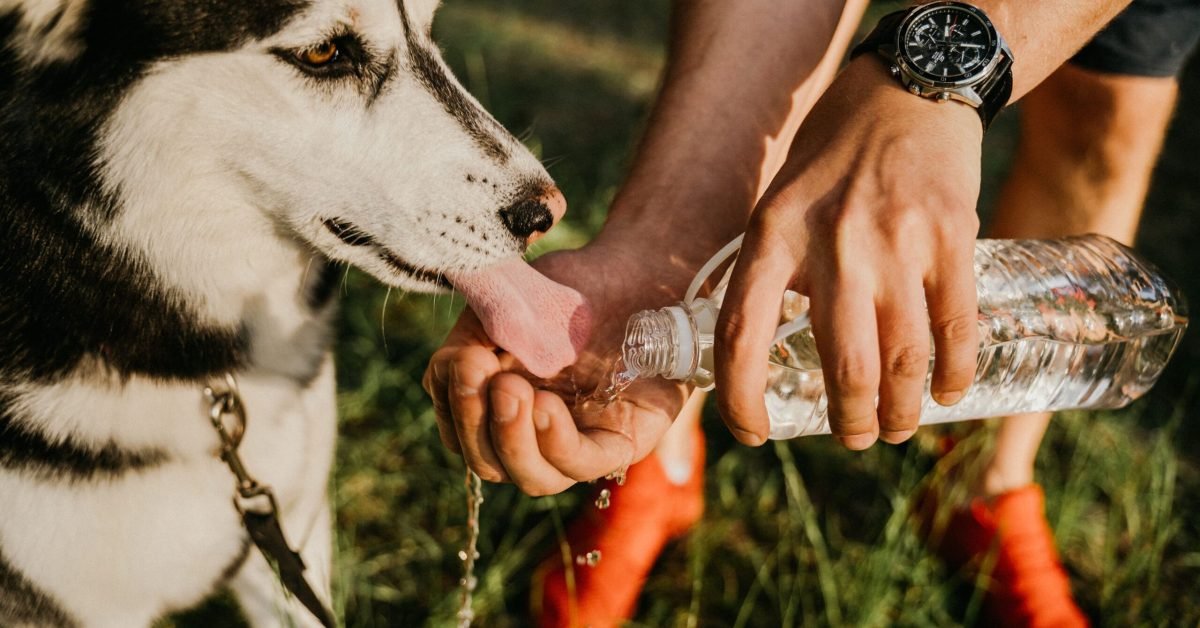
The general rule is one ounce of water per pound of body weight per day — more on hot days or after exercise. Always have multiple fresh water sources available. On very hot days add ice cubes to water bowls to keep it cool longer. Carry water on walks — collapsible bowls are inexpensive and worth having.
Shade and Ventilation
Never leave your dog in direct sun without access to shade. Doghouses in direct sunlight actually trap heat and can become dangerously hot. Make sure outdoor dogs have access to a cool shaded area and adequate ventilation at all times. A kiddie pool in the shade is an inexpensive way to give water-loving dogs a way to cool down.
Grooming
This is counterintuitive but important — do not shave double-coated breeds like Huskies, Golden Retrievers or German Shepherds in summer. Their double coat actually insulates against heat as well as cold. Shaving it removes the insulation and can cause sunburn. Regular brushing to remove the undercoat is helpful. Ask your groomer what is appropriate for your specific breed.
Exercise
Reduce intensity and duration of exercise during heat waves. Swimming is an excellent low-impact summer exercise option for dogs who enjoy water. Mental stimulation through training, puzzle toys and nose work provides exercise without the heat risk of physical activity.
Breeds That Need Extra Summer Care
While all dogs need summer precautions, certain breeds are significantly more vulnerable to heat:
- Brachycephalic breeds — Bulldogs, Pugs, Boston Terriers, French Bulldogs, Boxers, Shih Tzus. Their shortened airways make panting less effective. These dogs overheat far faster than other breeds and require extra vigilance in warm weather.
- Double-coated breeds — Huskies, Malamutes, Samoyeds, Chow Chows. Despite their thick coats these breeds can overheat — keep exercise minimal during peak heat.
- Older dogs and puppies — Both have less efficient temperature regulation than healthy adult dogs.
- Overweight dogs — Extra body fat acts as insulation and makes cooling harder. Another reason to keep your dog at a healthy weight.
- Dogs with heart or respiratory conditions — Talk to your vet about specific summer precautions for dogs with existing health conditions.
Summer gatherings bring additional hazards. Common cookout foods that are toxic to dogs include corn on the cob, onions, garlic, grapes, alcohol, xylitol in sugar-free items, and cooked bones which splinter and cause internal damage. Keep your dog away from the food area and make sure guests know not to feed them table scraps.
Water Safety
Not all dogs are natural swimmers — bulldogs, dachshunds, pugs and basset hounds in particular can struggle badly in water. Never assume your dog can swim regardless of breed. Always supervise near pools, lakes and rivers. A properly fitted canine life jacket is a worthwhile investment for boating or extended water activities.
After swimming rinse your dog with fresh water to remove chlorine, salt or lake bacteria that can irritate skin. Check and dry the ears — moisture in the ear canal is a leading cause of ear infections in dogs who swim regularly.
Find dog-friendly parks, pools and outdoor spaces near you.
Try the Free Pet Friendly Places Finder →