
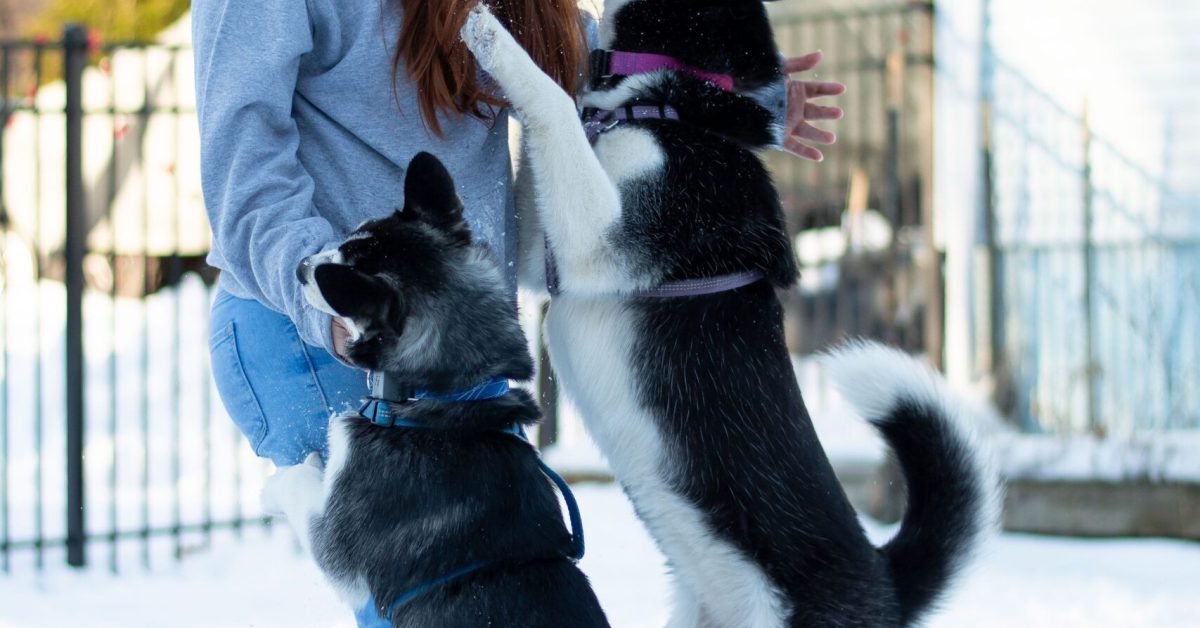
How to Stop Your Dog From Jumping on People
Your dog jumps on you when you come home. They jump on guests before the door is fully open. They jump on strangers on walks. It is enthusiastic, it is loving — and it needs to stop. As a former military veterinary technician I can tell you that jumping is one of the most fixable behaviors there is. Here is how to do it.
Why Dogs Jump in the First Place
Understanding why your dog jumps makes it much easier to fix. Dogs jump to greet faces — in the dog world, face-to-face greetings are normal. Puppies jump up to reach their mother's face. Adult dogs jump to get closer to your eyes and mouth — the most expressive and scent-rich parts of your face.
Jumping is also almost always accidentally reinforced by owners. Every time you looked at the jumping dog, pushed them down, said "no" or "off," or gave them any attention at all — you rewarded the jumping. Even negative attention is attention. Your dog learned that jumping works.
The good news: if jumping was learned it can be unlearned. It just takes consistency.
The Golden Rule — Jumping Gets Nothing
The single most important principle in stopping jumping is this: jumping must result in zero reward of any kind.
No eye contact. No pushing. No "off." No "no." No touching. Nothing.
The moment your dog's paws leave the ground — you become the most boring thing in the world. The moment four paws are on the floor — everything good happens.
This is the foundation. Every method below is built on it.
4 Effective Methods to Stop Jumping
When your dog jumps — immediately turn your back. Cross your arms. Look at the ceiling. Become a statue. No words, no eye contact, no touching. The second all four paws hit the floor, turn back and calmly reward with praise and a treat. If they jump again — immediately turn away again. Repeat until they figure out that four paws on the floor is what brings your attention. Most dogs start to figure this out within 10-15 repetitions. Be patient and be consistent.
A dog cannot sit and jump at the same time. Once your dog knows the Sit command use it the moment they approach you. Ask for Sit before they have a chance to jump. The moment their bottom hits the floor reward generously. You are giving them an alternative behavior that gets them everything they want — your attention — without the jumping. This works especially well for dogs who already know Sit reliably. Practice this every time you come home and every time guests arrive.
Management means preventing jumping from happening so your dog cannot practice it and reinforce it. Use a leash when guests arrive so you can control the greeting. Ask guests to ignore your dog until they are calm. Use baby gates to keep your dog back until they settle. Crate or confine during high-excitement arrivals while you are working on training. Management does not teach the dog anything — but it prevents the habit from getting worse while you are building the new behavior.
Most jumping happens at the door when excitement is highest. Practice makes perfect — for good and bad behaviors. Deliberately practice your arrivals. Come through the door calmly without making it a big event. Do not make eye contact or greet your dog until they have all four paws on the floor and are calm. Practice leaving and coming back multiple times in a row — in and out, in and out — until your dog is no longer reacting to the door. You are teaching them that arrivals are not exciting events worth jumping over.
Dealing With Jumping on Guests
This is where training most often falls apart — because guests do not follow the rules. You have trained your dog perfectly but then your guest squeals, bends down and pets the jumping dog. That one interaction undoes significant progress.
Before guests arrive brief them simply: "Please completely ignore the dog if she jumps — no eye contact, no touching, no talking. The moment she has four paws on the floor you can pet her." Most people will cooperate when they understand why.
If certain guests cannot or will not cooperate — manage the situation by leashing your dog or using a baby gate during greetings. Your training should not be undermined by well-meaning visitors.
Every single person in your household must respond to jumping the exact same way every single time. If one person allows jumping and another corrects it — your dog cannot learn what the rule actually is. Consistency across all people in the home is non-negotiable for this to work.
What NOT to Do
- Do not knee your dog in the chest. This is painful, can injure your dog, and creates fear and mistrust without teaching anything useful.
- Do not grab paws and hold them. This causes discomfort and anxiety without communicating what you want instead.
- Do not repeat "off" or "no" multiple times. If your dog has not responded to the word by the second time it is not working. Go back to basics.
- Do not pet the dog to calm them down when they are jumping. You are rewarding the jumping even if it feels like calming them.
- Do not expect overnight results. A behavior that has been reinforced hundreds of times takes consistent practice to change. Expect several weeks of work before you see reliable results.
How Long Does It Take?
With consistent daily practice most dogs show significant improvement within two to four weeks. Dogs who have been jumping for years may take longer — you are essentially overwriting a well-practiced habit.
The key variables are consistency and repetition. The more everyone in your household follows the same approach every single time — the faster your dog will learn.
Ready to work on more basic commands with your dog?
Read the 5-Day Basic Commands Guide →