
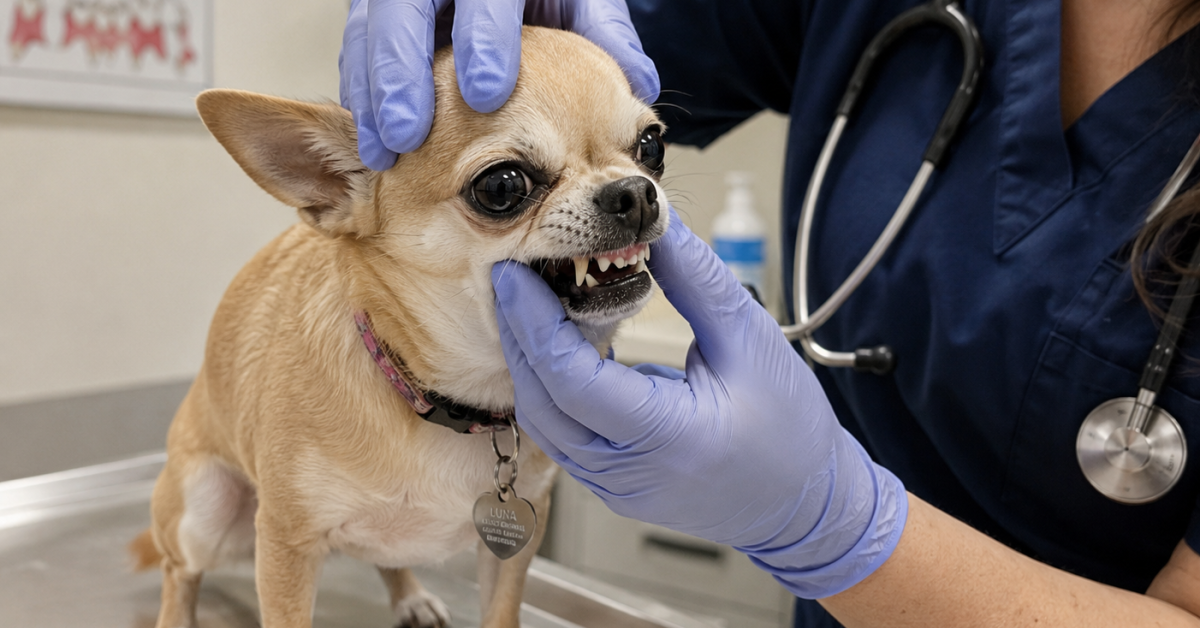
Dog Dental Health Warning Signs Every Owner Should Know
I performed a lot of dental cleanings as a military veterinary technician. And I saw what neglected teeth look like up close — infected roots, loose teeth, gum disease so advanced it was affecting the dog's ability to eat and causing systemic health problems. Most of those owners had no idea anything was wrong. Here's what I want every dog owner to know.
Why Dental Health Matters More Than You Think
Dental disease is one of the most common health problems in dogs — and one of the most underestimated. By age 3, over 80% of dogs have some form of periodontal disease. That's not a minor statistic. That's the majority of pet dogs walking around with chronic mouth pain that their owners don't know about.
The reason it gets missed is simple. Dogs don't complain. They adapt. They keep eating, keep playing, keep wagging their tails — all while quietly dealing with infected gums and painful teeth. By the time most owners notice something is wrong, the disease has been progressing for months or even years.
What makes it even more serious is that dental disease doesn't stay in the mouth. Bacteria from infected gums enter the bloodstream and travel to the heart, kidneys, and liver. Studies consistently show a link between severe periodontal disease and organ damage in dogs. This is not just about bad breath — it's a whole-body health issue.
8 Warning Signs of Dental Disease in Dogs
1. Bad Breath Beyond Normal
All dogs have some degree of dog breath. But there's a significant difference between normal and concerning. If your dog's breath has a strong, persistent, rotten or unusually foul odor — that's a red flag. Healthy mouths don't smell strongly. That odor is bacteria, and bacteria means disease.
2. Yellow or Brown Buildup on Teeth
Tartar — the hard yellow or brown crust that builds up on teeth — is calcified plaque. Once tartar forms it can only be removed by professional cleaning. You can see it along the gum line, especially on the back teeth. Even a small amount of visible tartar means the process has already started.
3. Red, Swollen, or Bleeding Gums
Healthy gums are pink and firm. Gums that look red, puffy, or bleed when touched indicate gingivitis — the early stage of periodontal disease. This stage is still reversible with proper cleaning and care. If left untreated it progresses to periodontitis which causes permanent damage to the bone and tissue supporting the teeth.
4. Pawing at the Mouth or Face
When a dog repeatedly paws at their face or rubs their muzzle on the floor or furniture, they're trying to relieve discomfort. Dogs can't tell you their tooth hurts — but this behavior is one of the ways they communicate it. Take it seriously.
5. Reluctance to Eat Hard Food
If your dog has suddenly lost interest in kibble, chews their food only on one side, or drops food while eating — a painful tooth or sore gums is often the reason. Dogs are very good at adapting their eating habits to work around pain, which is why this sign can go unnoticed for a long time.
6. Drooling More Than Usual
Excessive drooling that's new or significantly increased can indicate oral pain or infection. Some breeds drool naturally, so this one requires knowing what's normal for your specific dog. A sudden change is what matters here.
7. Loose or Missing Teeth
Adult dogs should not lose teeth. If you notice a loose tooth or find a tooth that has fallen out, that's advanced disease. The bone supporting the tooth has been compromised to the point where the tooth can no longer stay in place. This requires immediate veterinary attention.
8. Swelling on the Face or Below the Eye
A swollen area on the face, particularly below the eye, can indicate a tooth root abscess — a serious infection at the base of the tooth. This is painful, potentially dangerous, and needs to be treated right away. Don't wait this one out.
What You Can Do at Home
Brush Your Dog's Teeth
Daily brushing is the single most effective thing you can do for your dog's dental health. Use a soft bristled toothbrush and dog-safe toothpaste — never human toothpaste, which contains ingredients that are toxic to dogs. Start slowly, let your dog get used to the taste and sensation, and build up to a full brushing routine. Your vet can show you the proper technique.
Dental Chews
Look for dental chews that carry the Veterinary Oral Health Council (VOHC) seal of acceptance. This seal means the product has been tested and proven to reduce plaque or tartar. Not all dental treats are created equal — the VOHC seal is what separates the ones that actually work from the ones that are just marketed to look like they do.
Water Additives
Dental water additives are added to your dog's water bowl daily and help reduce bacteria in the mouth. Ask your vet which ones they recommend — some are more effective than others.
Professional Cleanings
Home care slows the progression of dental disease but it doesn't replace professional cleaning. Annual dental cleanings under anesthesia allow the vet to clean below the gum line where plaque and tartar do the most damage, take dental X-rays to assess the roots, and identify and treat any problems before they become serious. Yes, anesthesia carries some risk — but untreated dental disease carries far more.
The easiest time to introduce tooth brushing is when your dog is a puppy. But it's never too late to start. Even if your dog is older and has never had their teeth brushed, you can build up to it gradually. Ask your vet for help getting started.
A Note on Small Breeds
Small breeds — including Chihuahuas, Maltese, Yorkies, and Shih Tzus — are significantly more prone to dental disease than large breeds. Their teeth are crowded into a smaller jaw, which accelerates plaque buildup and makes cleaning harder. If you have a small dog, dental care is even more important and professional cleanings may be needed more frequently.
Sugar, my 15-year-old Maltipoo, has had regular dental care throughout her life. At 15 she still has most of her teeth. That's not luck — that's consistent care over many years.
Check your dog's overall health with our free tools.
Open the Dog Care Checklist →