
Understanding Dog Body Language: What Your Dog Is Really Telling You
Dogs are communicating with us constantly. Every tail wag, ear position, yawn, and weight shift is information. The problem is that most of us were never taught how to read it. After years in veterinary medicine — and a lifetime with dogs — reading canine body language has become second nature to me. Here's what I want every dog owner to know.
Why This Matters More Than You Think
Most dog bites don't come out of nowhere. In almost every case, the dog gave multiple warning signals that were missed or ignored — sometimes by adults, more often by children who simply didn't know what to look for. Understanding body language doesn't just deepen your relationship with your dog. It keeps people safe.
It also helps you catch stress, discomfort, and pain earlier. A dog who is hurting will show it in their posture and behavior long before it becomes obvious. Knowing the signs means catching things early.
Happy and Relaxed Signals
A relaxed dog has soft, loose muscles throughout their body. Their movement is fluid rather than stiff. This is the baseline you want to know well — it's what comfortable looks like for your specific dog.
A happy wag is loose and sweeping, often involving the whole rear end. The tail held at or below the back level with a relaxed, sweeping motion signals comfort and friendliness. Note that tail wagging alone doesn't always mean happy — the position and stiffness of the wag matter enormously.
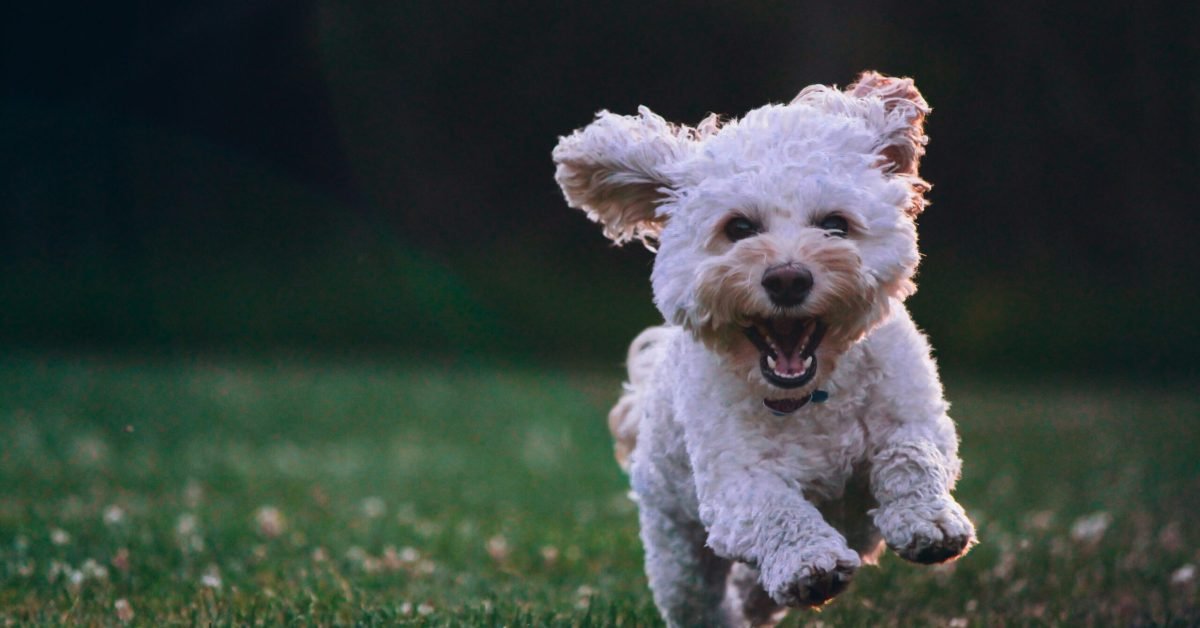
A relaxed dog has soft, almond-shaped eyes with no visible whites. Their mouth may be slightly open with a relaxed jaw — what people often call a "doggy smile." The face is smooth without tension around the forehead or muzzle.
Front end down, rear end up, tail wagging. This is one of the clearest happy signals in the canine vocabulary — an explicit invitation to play. If your dog does this to you, they are asking you to have fun with them.
Stress and Discomfort Signals
These are the signals most people miss — and they're the most important ones to learn.
A dog who yawns when they're not tired is using what behaviorists call a calming signal — a way of communicating "I'm uncomfortable" or "please slow down." You'll often see this at the vet, during a tense greeting with another dog, or when something is being asked of them that they find stressful.
A quick tongue flick to the nose or lips when there's no food around is another calming signal. Context is everything — if your dog does this while being hugged by a child, that child should give the dog some space.
When a dog turns their head slightly away but keeps their eyes on something, you can see the whites of their eyes in a crescent shape. This is called whale eye and it's a clear signal of stress or discomfort. It often appears when a dog is resource guarding or being approached in a way that makes them uneasy.
Ears flattened against the head signal fear, stress, or submission. Combined with a lowered body and tucked tail, this is a dog who is very uncomfortable and trying to make themselves small.
A tail tucked tightly under the body is a clear signal of fear or extreme stress. This dog is not okay with what's happening and needs space and reassurance, not pressure.
Stress panting looks the same as heat panting but happens in cool environments without physical exertion. If your dog is panting at the vet's office, during a thunderstorm, or in a situation that makes them anxious — that's stress, not temperature regulation.
Warning Signals — Take These Seriously
A dog who freezes or becomes very still and rigid is not calm — they are at the edge of their threshold. This is often a precursor to a snap or bite if the situation doesn't change. If a dog goes still under a child's hug, the child needs to be moved immediately.
The hair standing up along the spine — called piloerection — signals high arousal. It doesn't always mean aggression, but it always means the dog is responding strongly to something. Pay attention to what triggered it.
Never punish a growl. I mean this seriously. Growling is communication — it's a dog's way of saying "I am very uncomfortable and I need this to stop." A dog who is punished for growling learns to skip the warning and go straight to biting. The growl is a gift. Respect it.
A tail held very high and vibrating with small, rapid movements — rather than a loose sweep — signals high arousal and potential aggression. This is very different from a happy wag despite also involving tail movement.
Reading the Whole Dog
The most important thing to understand about body language is that you need to read the whole dog in context — not just one signal in isolation. A wagging tail means something very different on a loose, wiggly body versus a stiff, rigid one. Ears back can mean fear or it can mean your dog is listening intently to something behind them.
The more time you spend observing your specific dog in different situations, the better you'll get at reading their individual vocabulary. Dogs vary in how expressively they signal — a dog with a docked tail communicates differently than one with a full tail. A Bulldog's wrinkled face reads differently than a Husky's.
Know your dog. Watch them. The communication has been there all along — we just have to learn to receive it.
Start paying attention to what your dog looks like when they're completely relaxed and happy. That's your baseline. From there, every deviation tells you something. A dog you know well is a dog you can read well.
Want to deepen your bond through training?
Try the Dog Trick Randomizer →