We Tested 5 Popular Dog Toys — Here's What Actually Lasted
I have four dogs with four completely different play styles. Bentley, my 12-year-old Chihuahua, barely touches toys. Sugar, my 15-year-old Maltipoo, likes soft things she can carry around like treasure. Kody, my 12-year-old Westie, is a moderate chewer with opinions. And Glo — Glo is enthusiastic about everything and thorough about destruction. Testing toys in my house is basically an industrial durability trial. Here's what happened.
Why Most Toy Reviews Miss the Point
Most dog toy reviews are written by people with one dog, tested for a week, with a photo of the toy looking pristine. That's not how toys work in real life. Real life is four dogs of different sizes, ages, and energy levels. Real life is Glo deciding a puzzle feeder is an obstacle between her and food rather than a game. Real life is 30 days of actual use before I write a word.
These are honest reviews. Some toys passed. Some failed spectacularly. Here's what you need to know before you spend your money.
The Reviews
The Kong has been around for decades and it's earned every year of that reputation. The natural rubber construction holds up to serious chewing — Glo has had hers for over a year and it's barely marked. The hollow center is the real feature: stuff it with peanut butter and kibble, freeze it overnight, and you have a toy that keeps a dog engaged for 20-30 minutes and provides genuine mental stimulation.
I use frozen Kongs regularly for Glo, particularly before I leave the house. It gives her something compelling to do during the first few minutes of alone time when anxiety typically peaks. This toy earns its place in every household with a dog.
The Chuckit! ball is significantly tougher than a standard tennis ball and designed to work with the Chuckit! launcher for longer throws. The rubber construction holds up to fetch without deteriorating the way tennis balls do.
One thing worth knowing: the fuzz on standard tennis balls can wear down tooth enamel over time with heavy chewing. It acts like sandpaper on the teeth. The Chuckit! ball doesn't have that problem, which makes it a smarter long-term choice for fetch-motivated dogs.
Puzzle feeders are genuinely excellent for mental stimulation and slowing down fast eaters. The Outward Hound Nina Ottosson series is well-made and the concept is solid. For the right dog, these are wonderful.
Glo is not the right dog. She assessed the puzzle for approximately 45 seconds, decided it was an obstacle rather than a game, and attempted to disassemble it. She did not succeed — the toy held up — but the experience was more "frustrated lab trying to breach containment" than "enriched dog enjoying mental exercise."
For dogs with lower frustration tolerance or very high food motivation, puzzle feeders can become frustration objects rather than enrichment tools. Start with the easiest level and supervise.
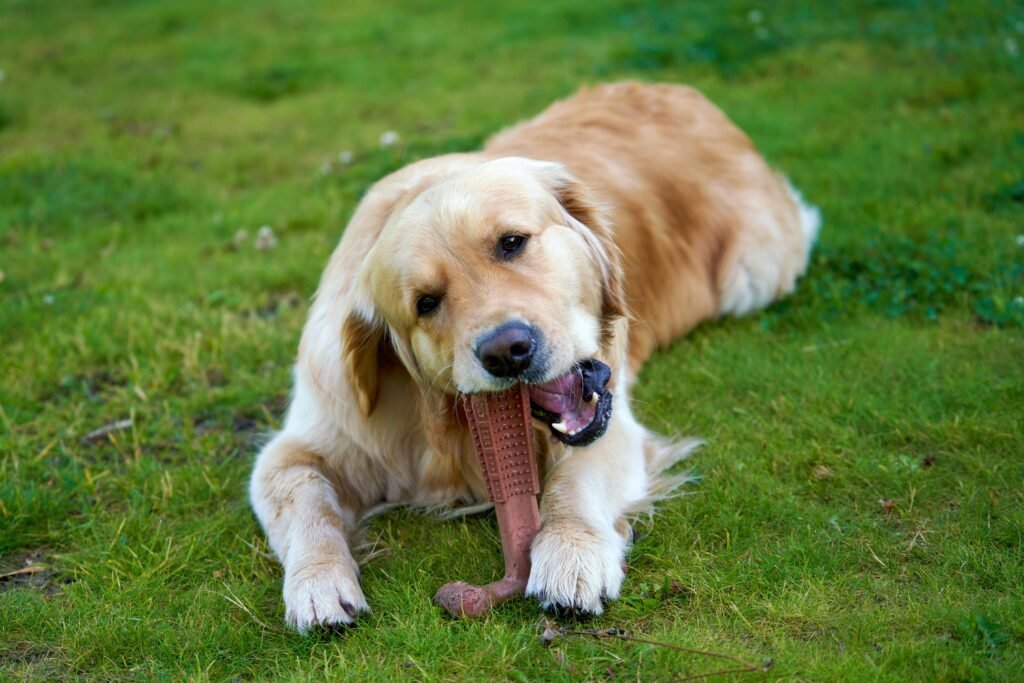
Nylabones are polarizing in the veterinary world and I want to give you an honest take. They hold up to chewing and last a long time — both things that matter. The concern is that aggressive chewers can sometimes break off small pieces, which can be swallowed and cause digestive issues or blockages.
The key is monitoring. Replace the Nylabone when it shows significant wear, knuckling, or when pieces start coming off. Never leave a dog unsupervised with one once it's showing wear. Used correctly with appropriate supervision, they're a useful option for dogs who need something to chew.
I want to be fair here. Sugar has had the same stuffed hedgehog for eight months and treats it like her most prized possession. For a gentle dog, plush toys are wonderful — soft, comforting, entertaining. Sugar carries hers around like she's transporting something precious.
For Glo, plush toys are confetti waiting to happen. The stuffing and squeaker also pose an ingestion risk if the toy is destroyed and the dog consumes the materials — both can cause blockages. Know your dog before you buy plush.
What to Look for Before You Buy
- Match the toy to your dog's play style — a toy that's perfect for one dog is a hazard for another. Know whether your dog is a chewer, a fetcher, a puzzle solver, or a cuddler.
- Size matters — toys should be large enough that they can't be swallowed whole. A toy that's fine for a large dog can be a choking hazard for a small one.
- Supervise new toys — always watch your dog with any new toy until you know how they interact with it.
- Replace worn toys promptly — a toy that was safe when new can become dangerous as it degrades. When pieces start coming off, it's time for a new one.
- Rotate toys — dogs get bored with the same toys. Keeping a rotation of 4–6 toys and swapping them out every few days keeps things feeling new without constantly buying more.
Stuff a Kong with a mixture of peanut butter, kibble, and a little plain yogurt. Seal the bottom with a dab of peanut butter and freeze overnight. It takes most dogs 20–30 minutes to work through and provides real mental enrichment. This is one of the best things you can do for a dog who struggles with alone time.
Looking for healthy homemade treat ideas to stuff in your Kong?
Browse the Treat Recipe Library →